
AllChild’s CEO Louisa speaks at the Joseph Rowntree Foundation’s UK Poverty 2026 report launch
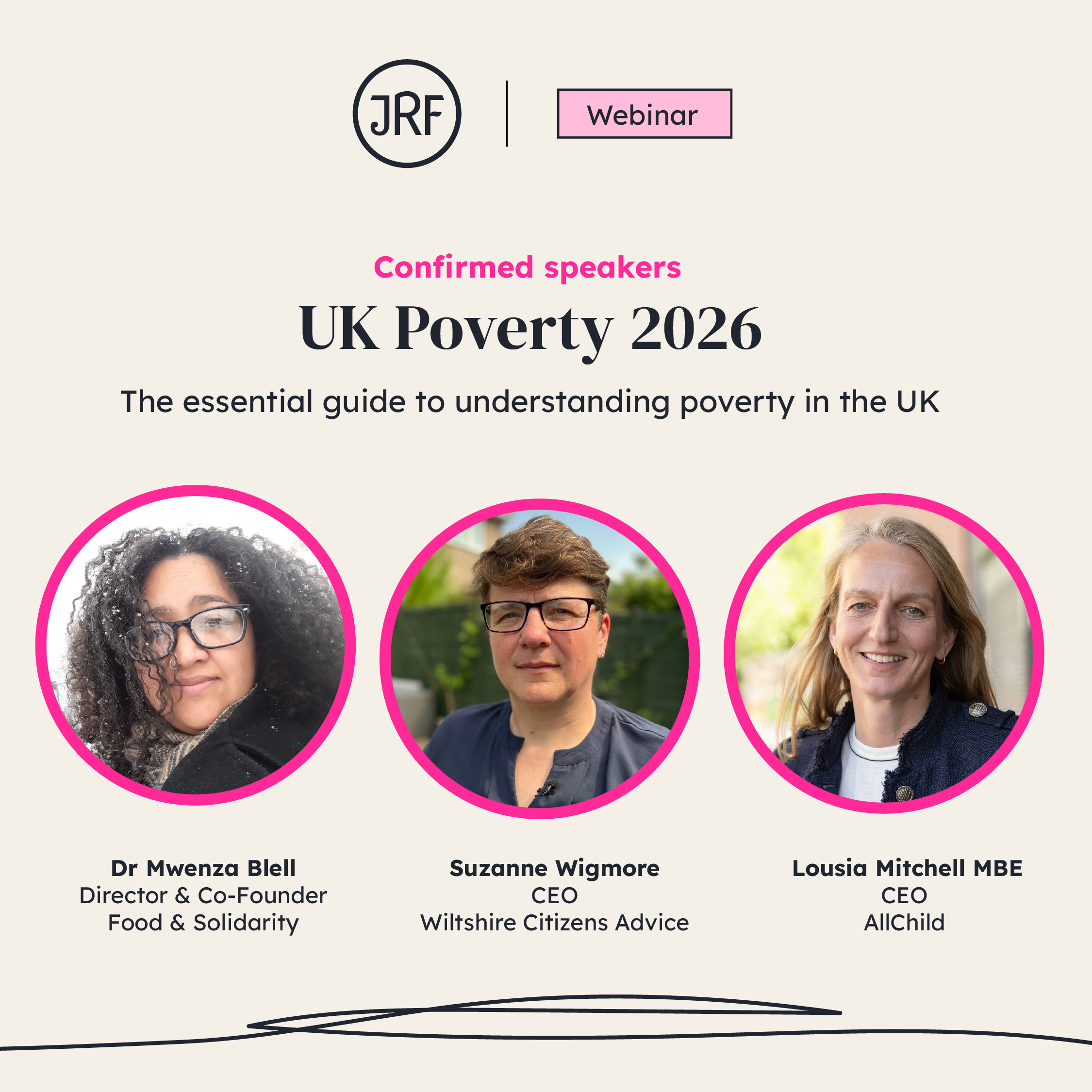
Yesterday, AllChild CEO Louisa Mitchell spoke at the launch of the Joseph Rowntree Foundation’s UK Poverty 2026 report, joining analysts from JRF and frontline organisations Citizen’s Advice and Food and Solidarity to discuss the findings with a 1,000+ audience. The report highlights the scale and depth of child poverty, rising for the third consecutive year, and the half of people in poverty now living in very deep poverty - the highest proportion on record.
The childhood experience
Louisa began by sharing how AllChild sees poverty intersect with many aspects of children’s lives. Children don’t talk about ‘poverty’ as a concept, rather it’s part of their daily experiences. Many face school sanctions and detentions because a blazer isn’t worn or a planner isn’t signed, because there isn’t a washing machine at home or their parents worked long hours. Many are constantly on edge, disregulated, and disengaged in class because of the looming threat their family has received of being rehoused out of their area any day now.
Such daily experiences impact young people’s mental wellbeing, peer relationships, school engagement, attendance, attainment, and aspiration. And without the right support and opportunities at the right time, many will experience the effects of poverty for the rest of their lives.
What it means for place
Louisa explained that poverty also affects whole neighbourhoods, shaping local infrastructure, public services, social networks, and relational ties. Areas with similar levels of poverty can look and feel very different, and it is important to recognise the difference in poverty between neighbourhoods, within the same local area. At AllChild, we adapt our approach to each local context through deep listening and co-design. Doing so, Louisa shared, in West London and Wigan, has highlighted just how different underlying conditions can be, even when challenges appear similar.
What needs to change – three core principles
“Behind every child poverty stat now, is a future stat… a future life… that can still be changed.”
Louisa reflected that if we are willing to work differently across the system now, the story these numbers tell in the years ahead doesn’t have to look the same as it does now.
Here are the three principles she outlined as essential for meaningful and tangible change:
1. Poverty is a lifelong issue
Child poverty is a lifelong issue that requires long-term thinking and long-term solutions. With millions of children projected to be in poverty in 2030 following the lifting of the 2-child benefit cap, Louisa urged the audience to consider ‘what can be done to stop today’s children in poverty from becoming tomorrow’s adults in poverty?’
It will require a fundamental shift in how we think about prevention, she said. Action is needed now, and we must accept that the benefits may only be seen in 5, 10, or even 20 years. This is achievable, but only if commissioners, funders, and policymakers enable it and accept they may not be the ones to see the results.
2. Zoom in on the conditions around each child and family
We need to focus on the environment and networks surrounding each child, improving the way they experience support, relationships, and opportunities. Strong, relational, connected local networks can make a significant difference.
When asked to give a tangible example of how this can work, Louisa outlined AllChild’s trusted adult model. Every child and young person has a Link Worker based full-time in their school, embedded within the local community and connected into the wider system of support, acting as a link, advocate, and consistent presence. Link Workers join up existing support, fill gaps where needed, and change the conditions around each child in tangible ways. Scaled effectively Louisa noted, this approach can make a significant and achievable difference to the way families access and experience support.
3. Solutions must be collective and coordinated
Action and investment from across the whole system - education, social care, housing, welfare, jobs and skills etc. - must all be coordinated with shared outcomes and collective accountability. At AllChild, this is done locally by co-designing shared outcomes frameworks with schools, local authorities, and local partners, all jointly invested and accountable for delivery. Louisa reflected that this approach can shift services from working alongside each other to working together, with children and families at the centre.
“Progress can’t be made through fragmented or piecemeal policy interventions. Poverty impacts people and places as a whole, and solutions must do the same.”
The need for a new way of investing in children
In closing, Louisa reflected on what gives her hope. The resilience, determination, ambition, and creativity of the children AllChild works with. She stressed that the scale and depth of child poverty highlighted by the report requires everyone to work together, with collective agreement on a new way of investing in children. One that involves public, private, and philanthropic sectors.
“I believe it’s going to take all of us together to help a generation of children change their life chances.”
